T: +44(0)1748 826060
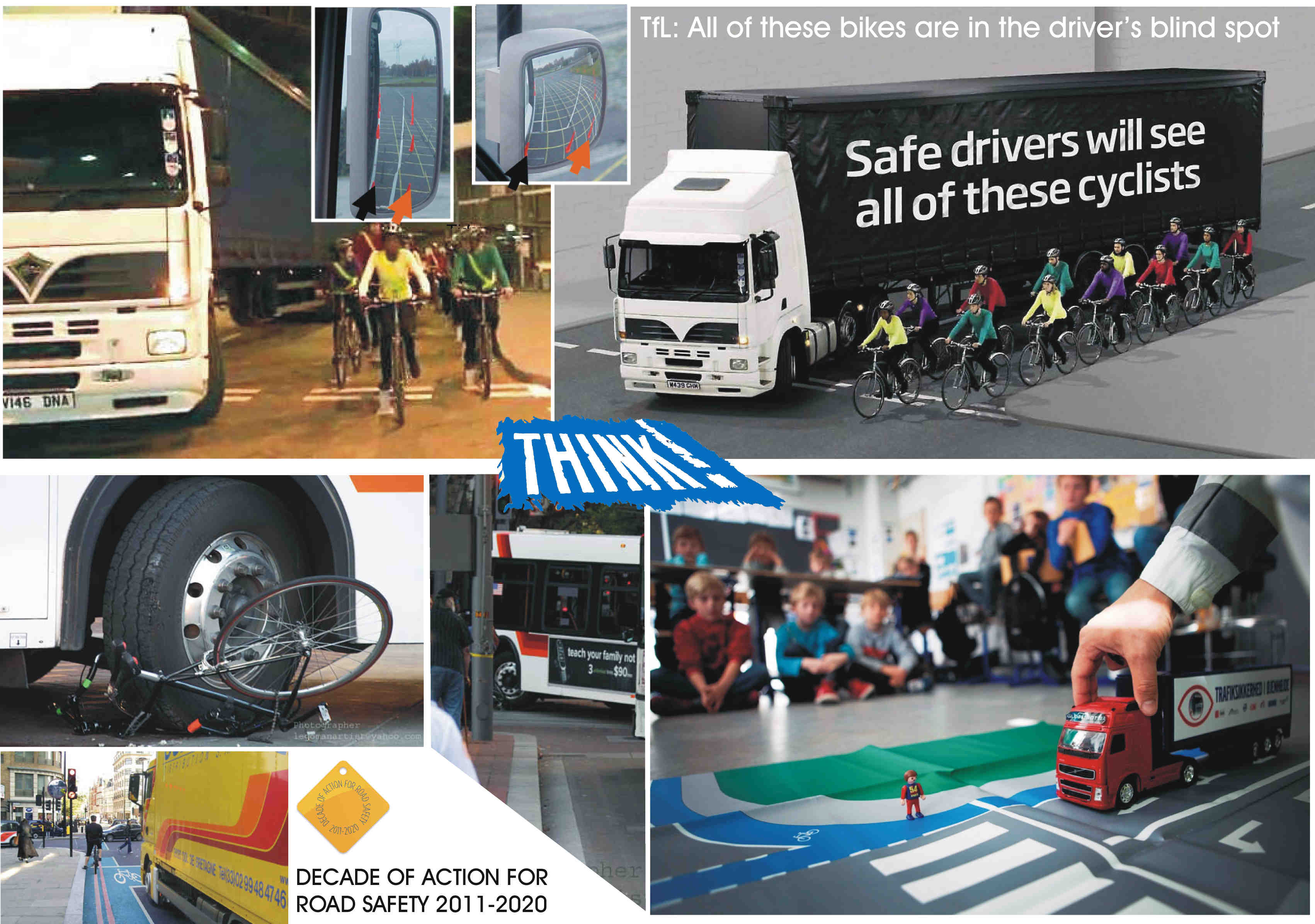
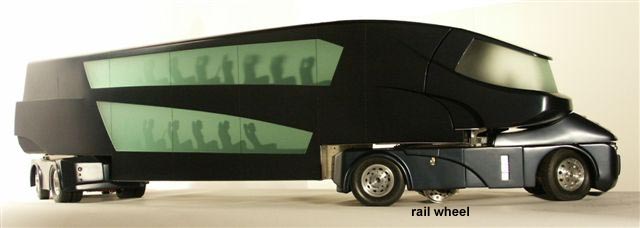
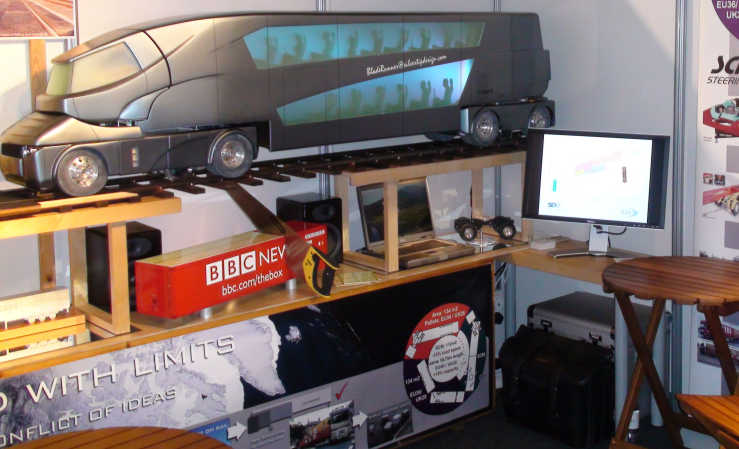
BladeRunner on show at 'Planet Eisenbahn', Nürnberg.
6 July 2010 to 27 Feb 2011
Experimental prototype significantly improves truck performance
Low Carbon Vehicle Event - Millbrook 2009
Minimise: Enironmental costs
Maximise: Economic benefit
Balance: Infrastructure design with vehicle performanceBetter vehicle designs and new 'optimisd' loading units are needed to improve transport efficiency and address the remaining intermodal logistics challanges.

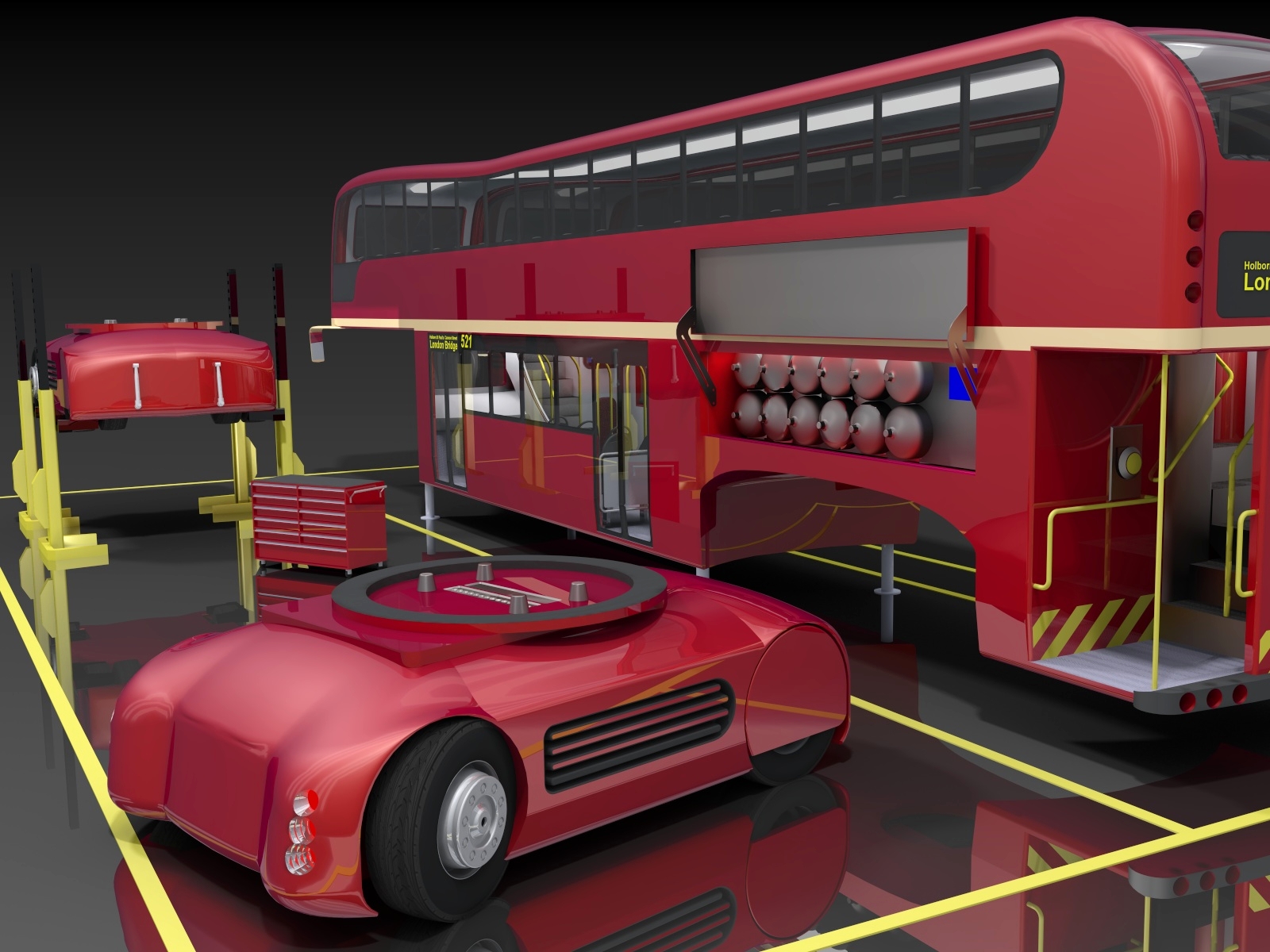
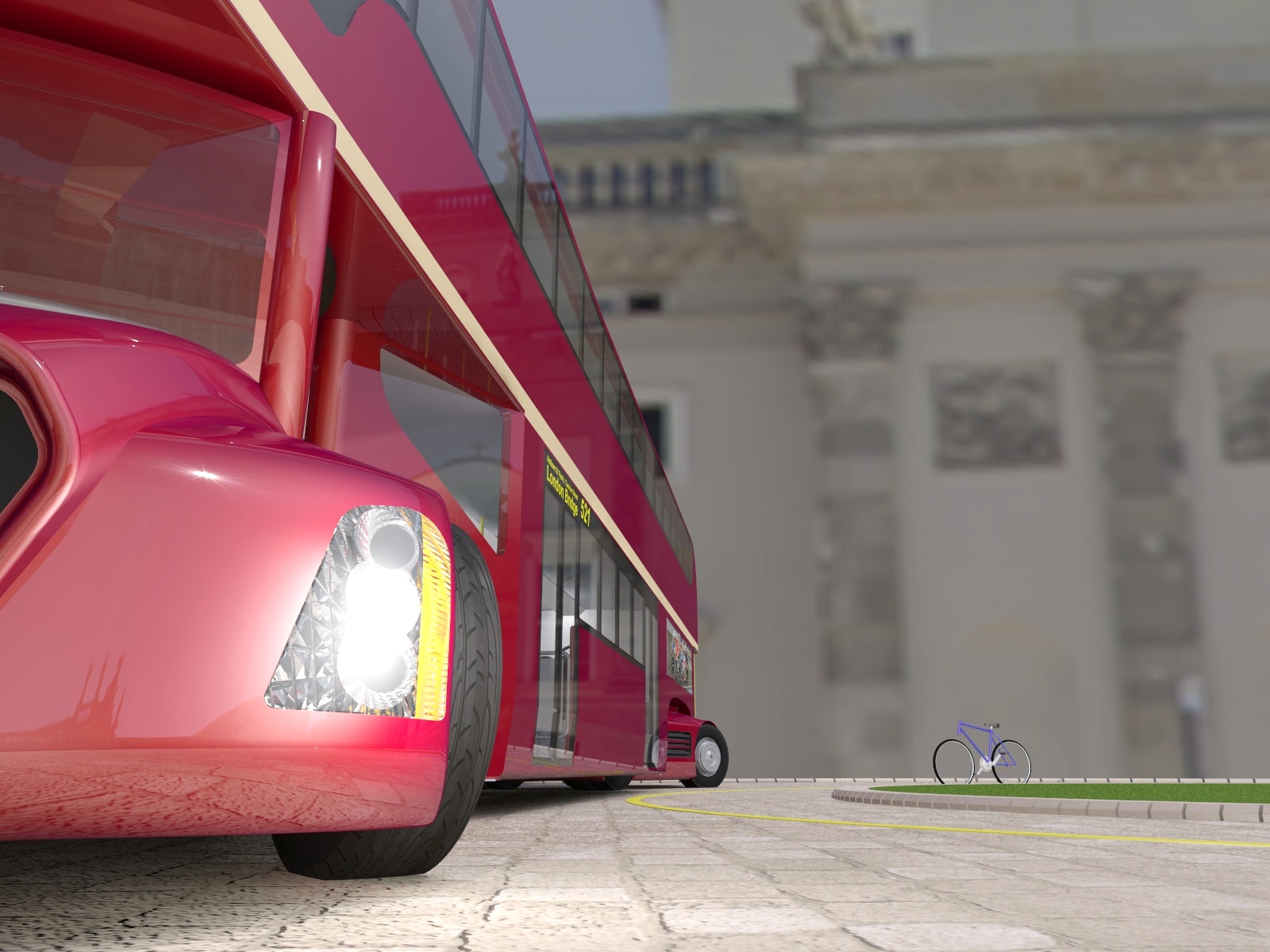
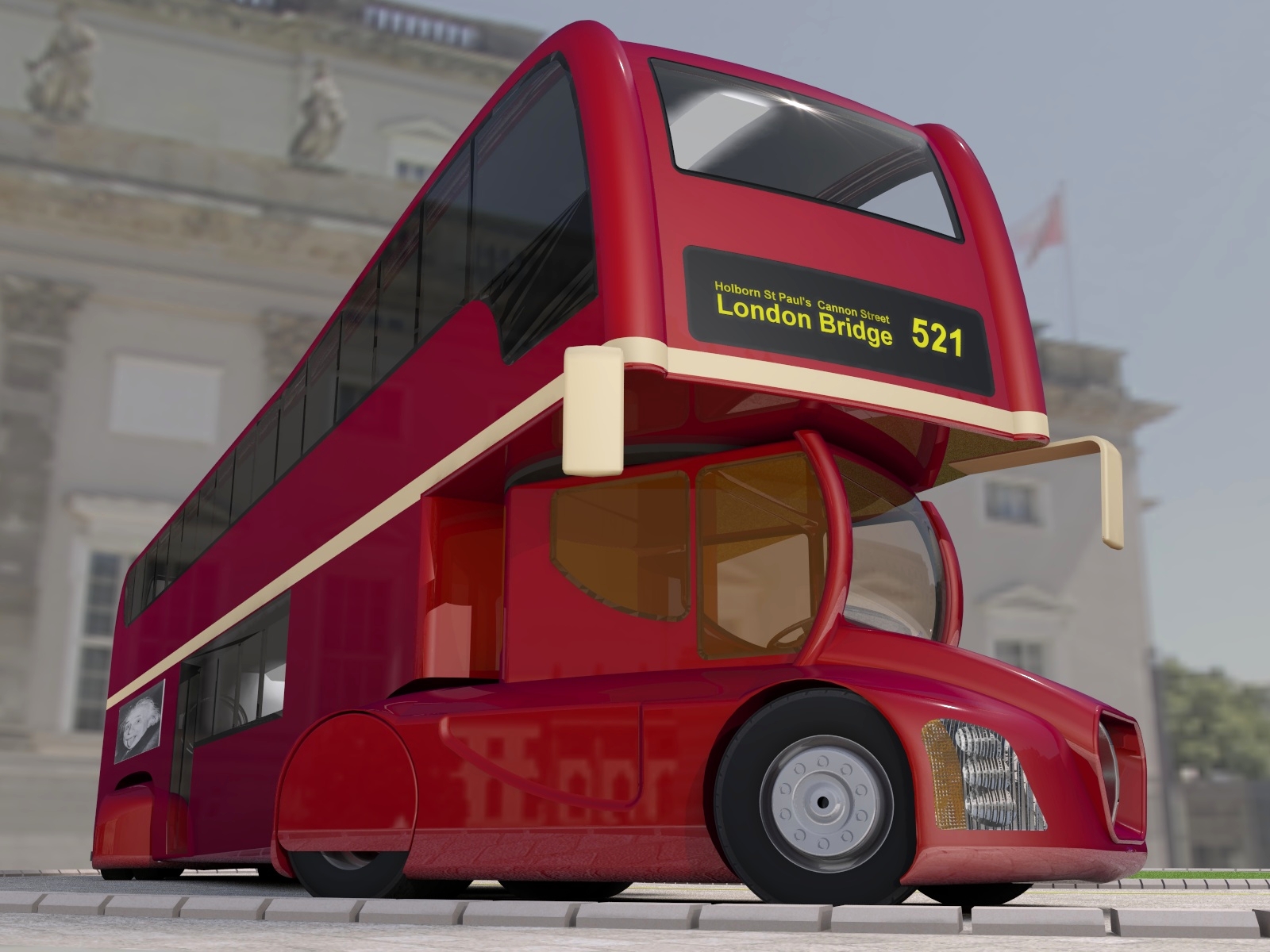
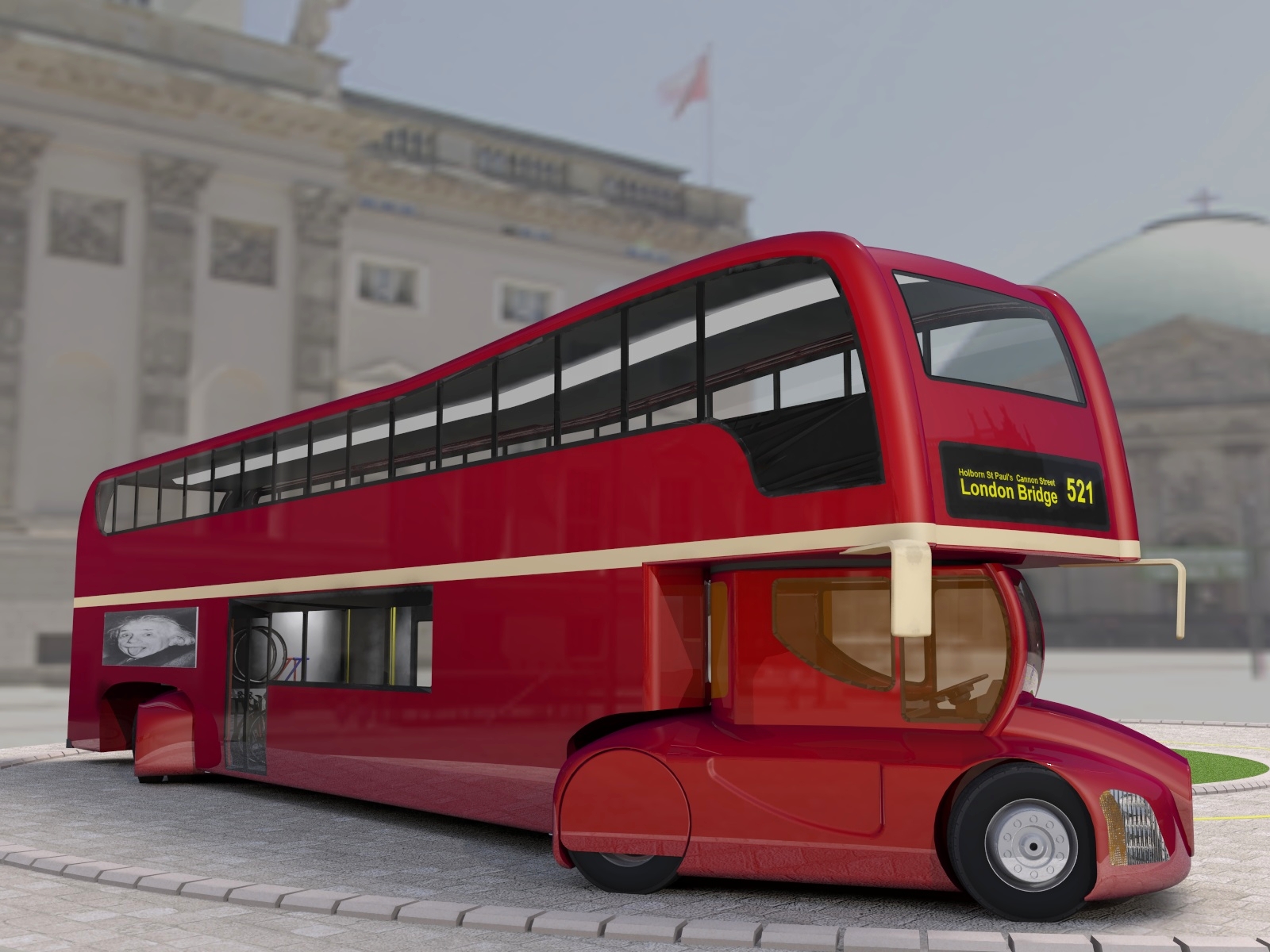
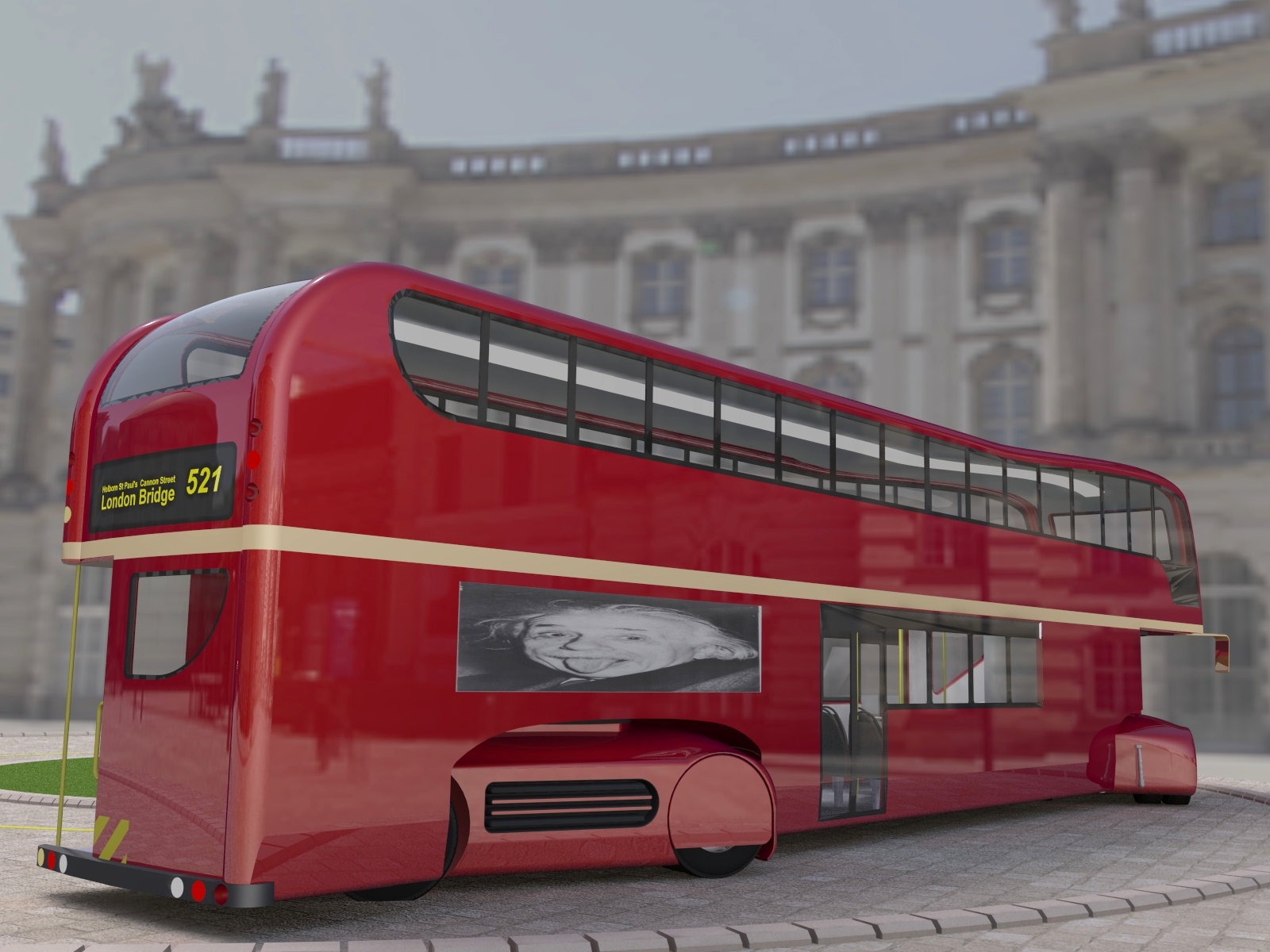
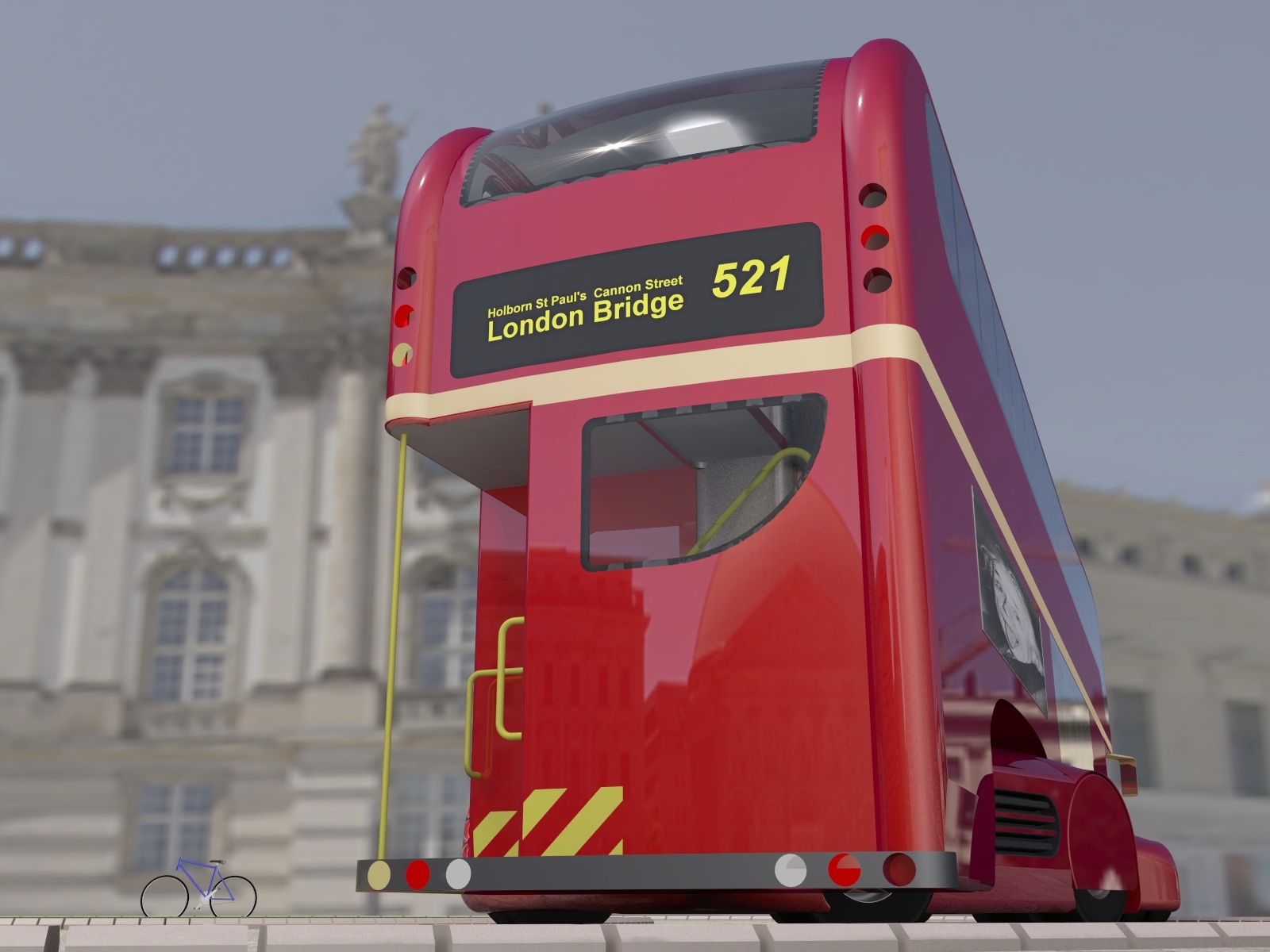
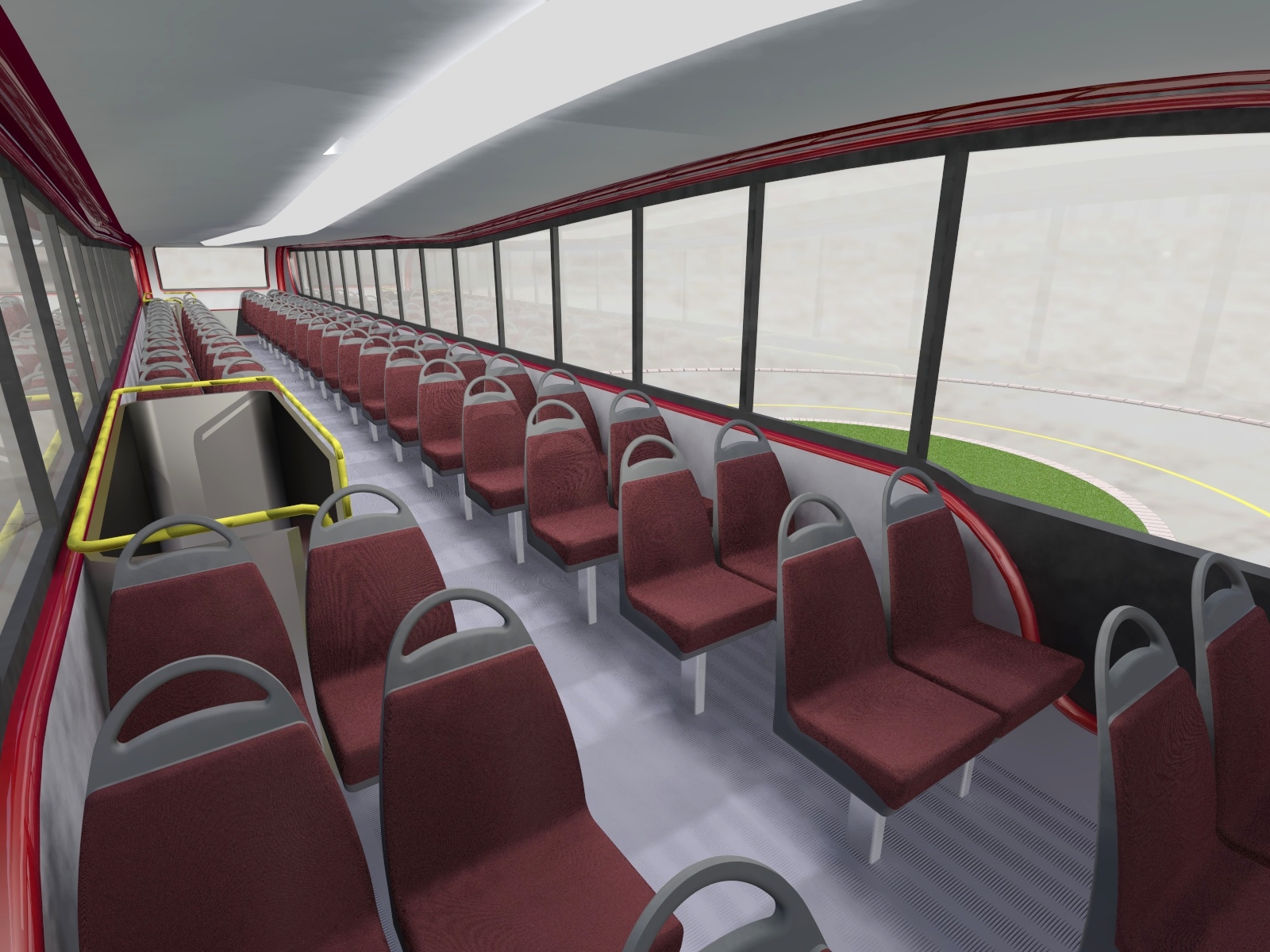
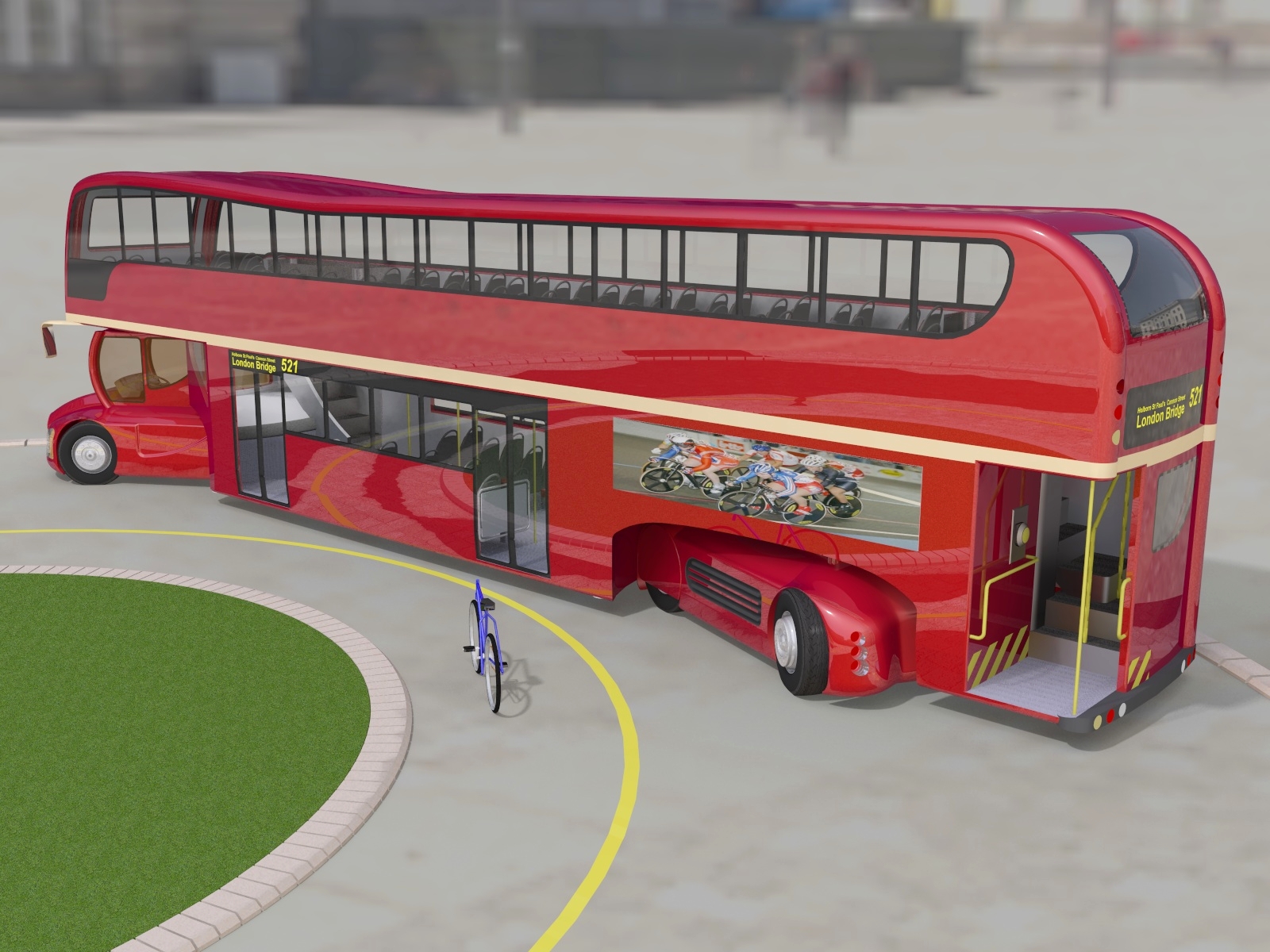
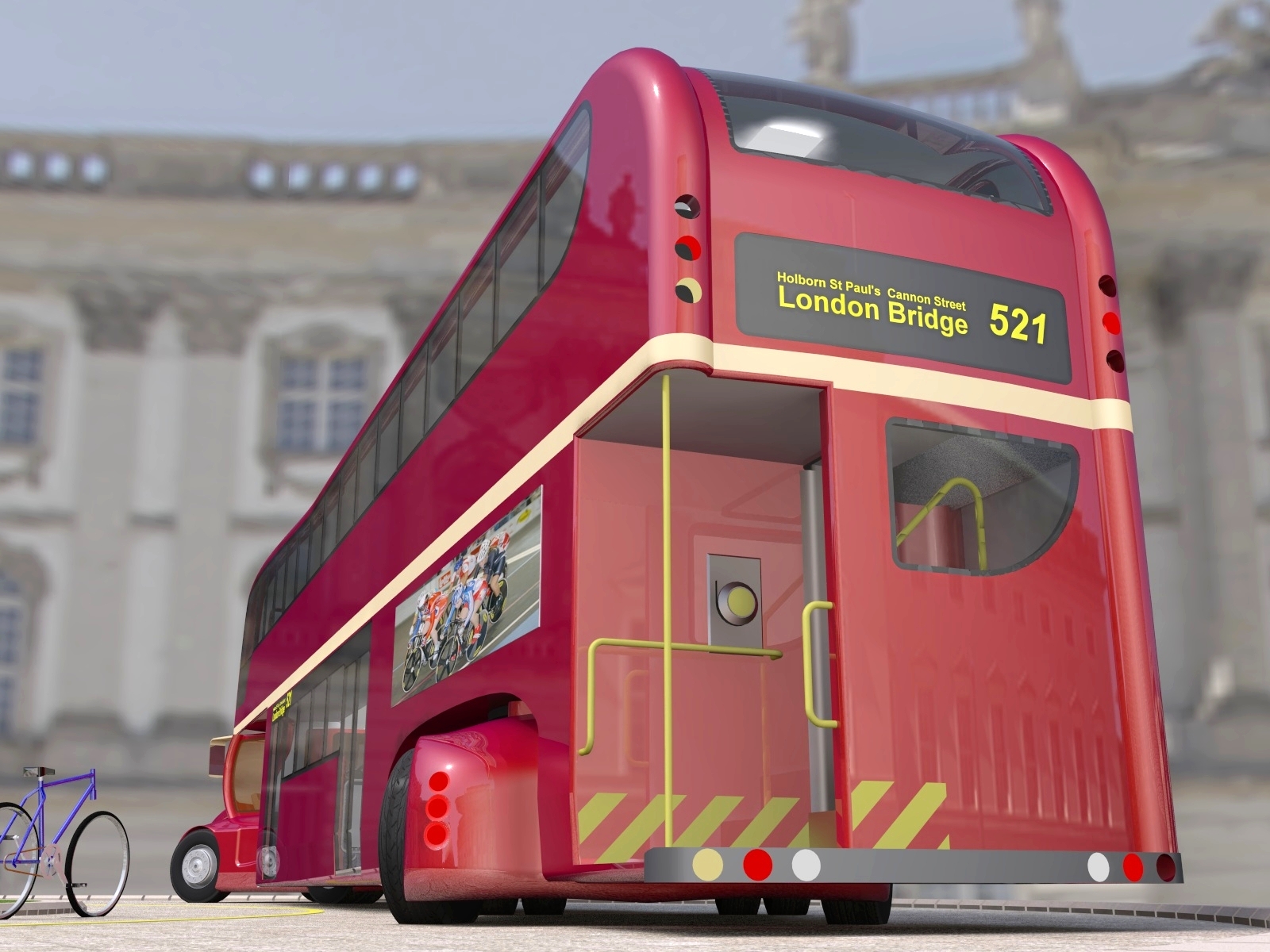
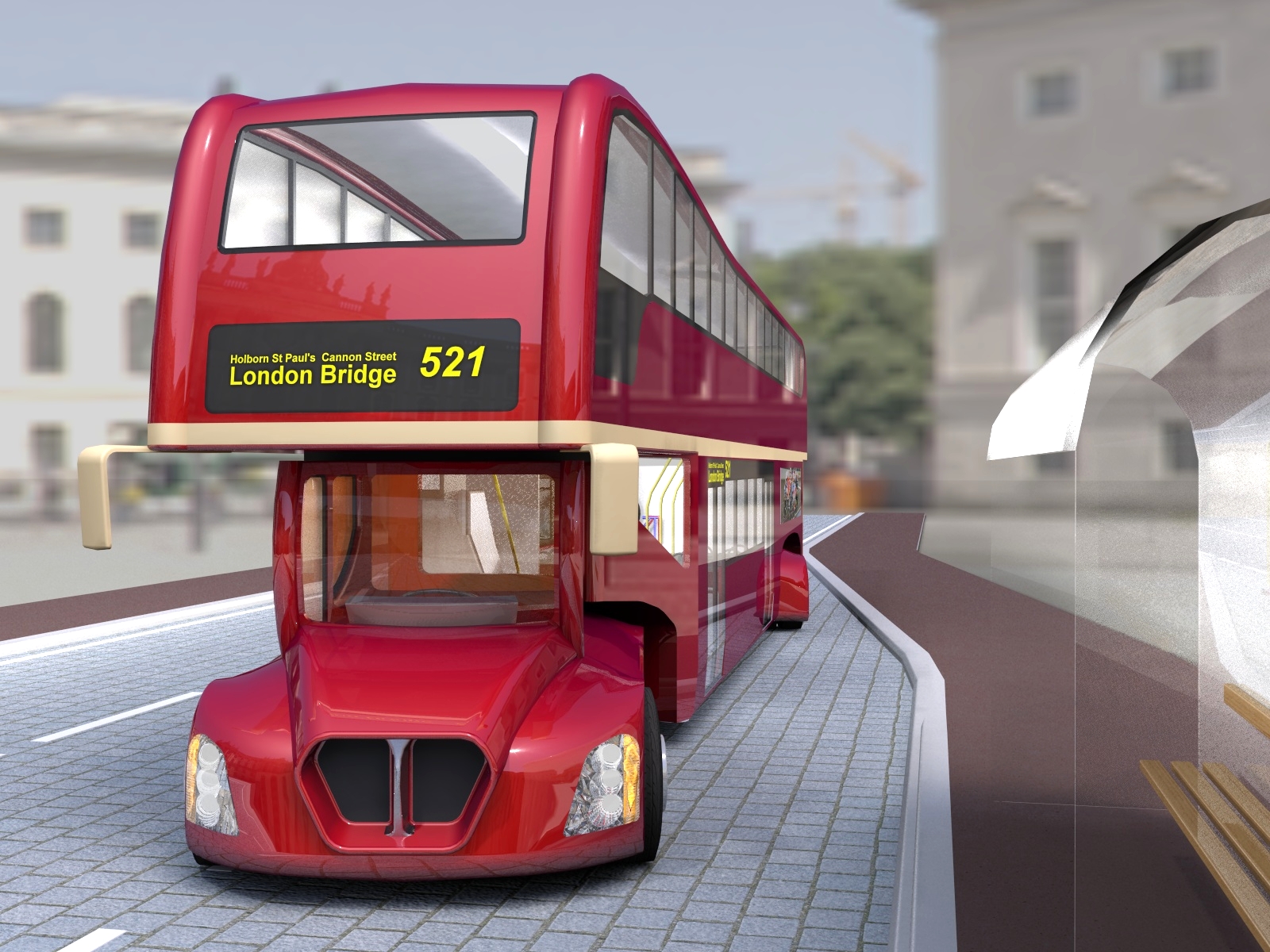
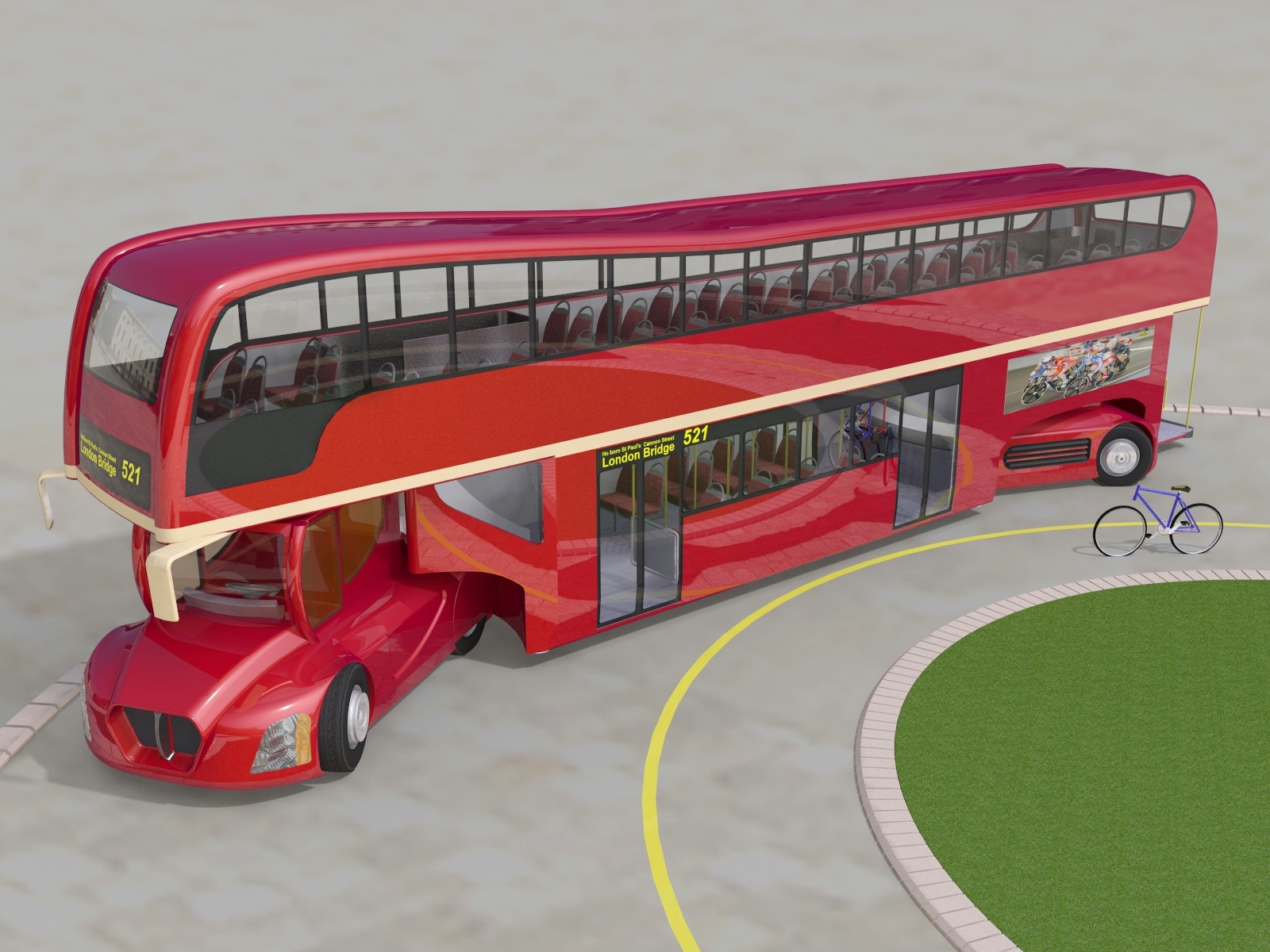
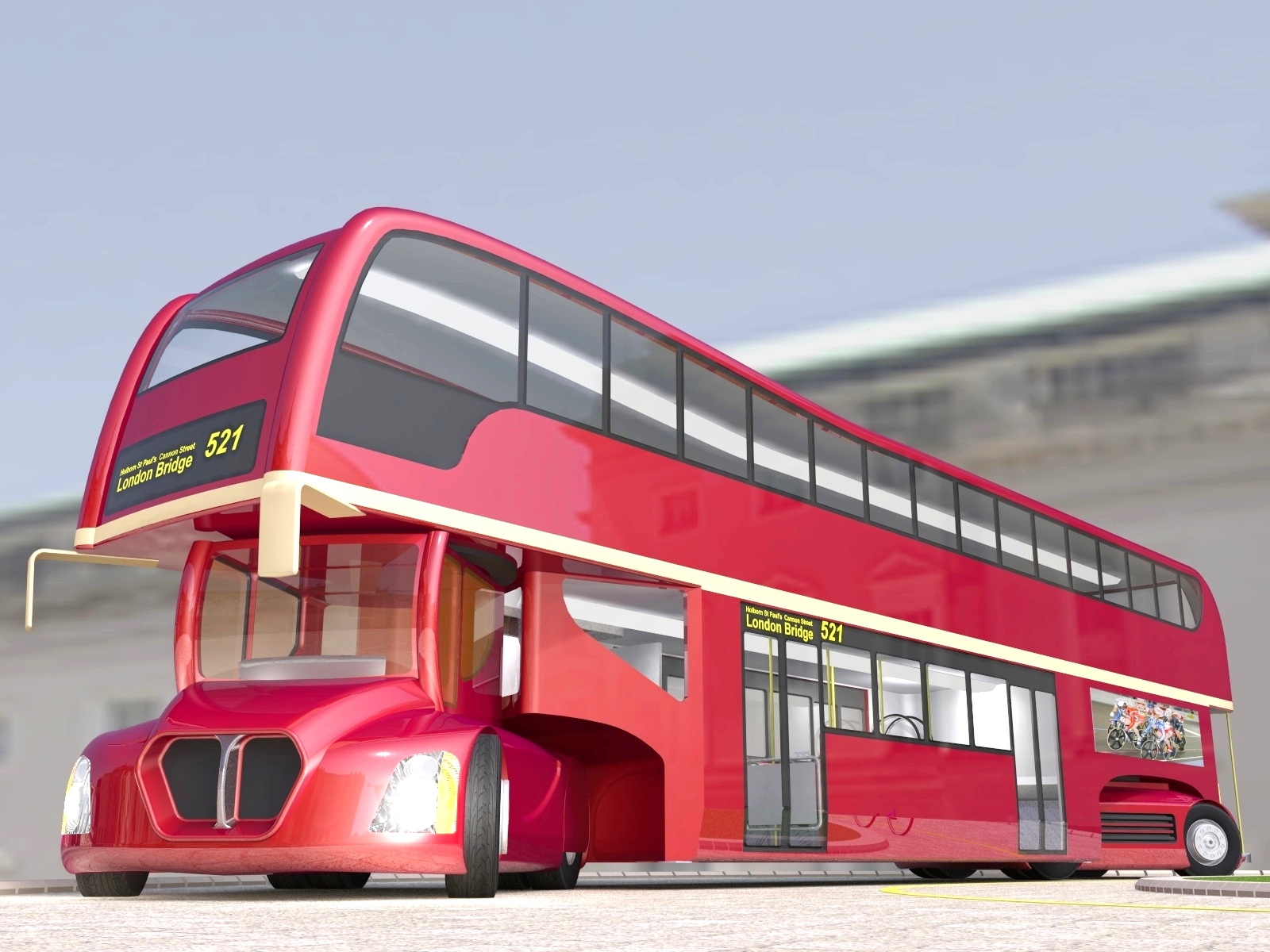
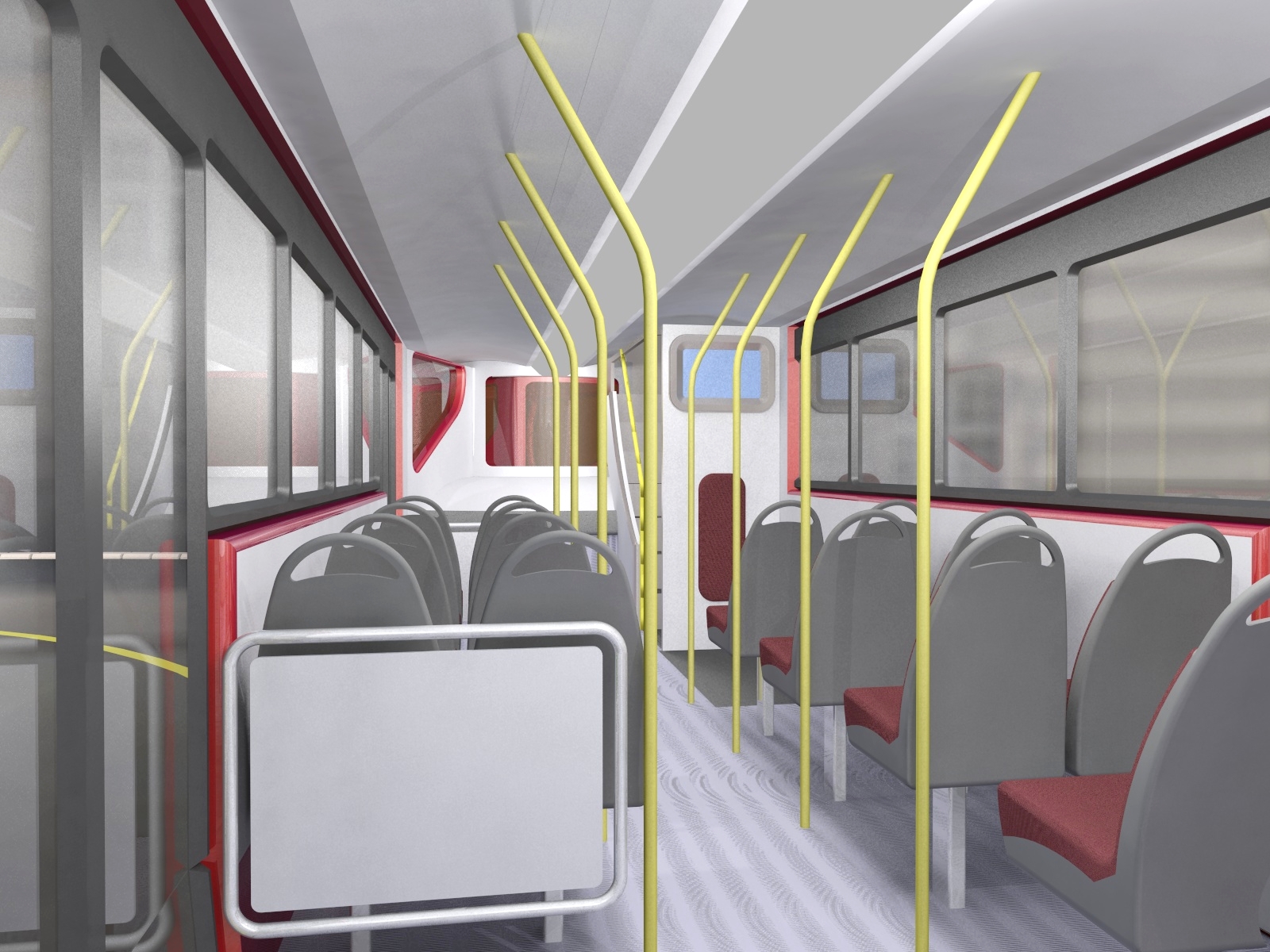
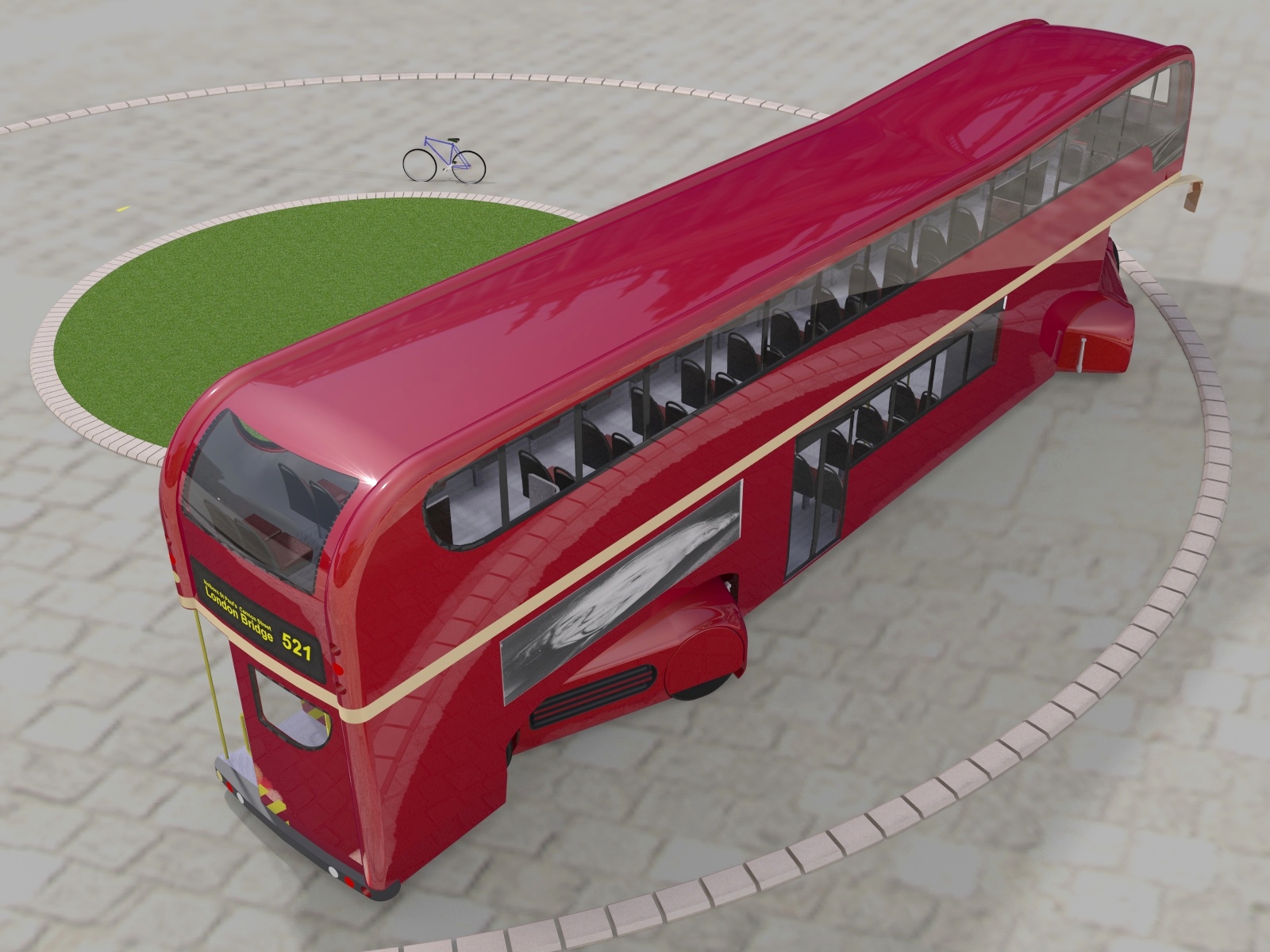
ROUTEMASTER 2010
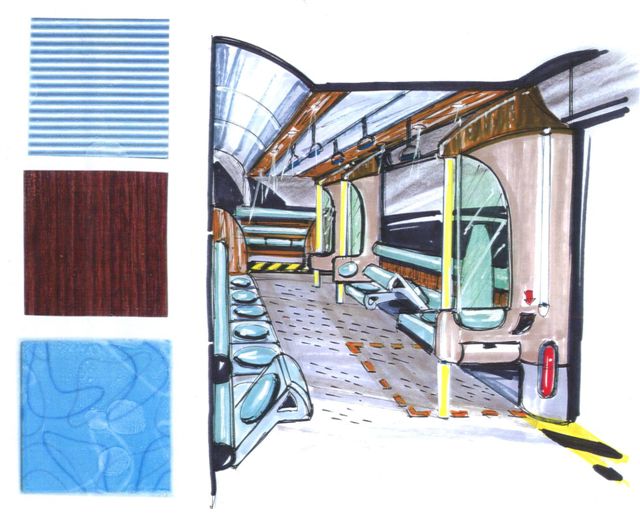
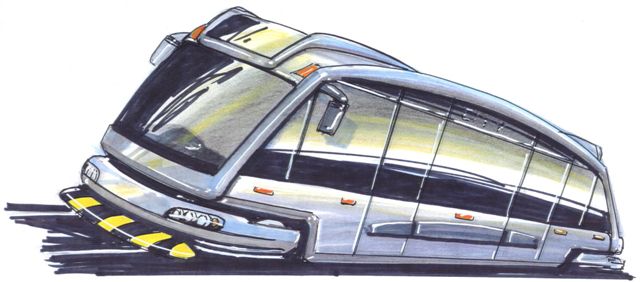
ULTRA LIGHT ROAD/RAIL concept
TIMESONLINE
Logistal Nightmare
November 26, 2007Bigger, longer, cheaper, greener: Superlorry is coming your way
November 26, 2007Longer lorries threaten our roads
October 10, 2007Longer lorries
October 8, 2007The future of freight needs rational debate
"Sir, Consider the impact the past restrictions on vehicle length have had on loading unit dimensions and the knock on effect the wide range of ILUs and swapbodies have had on handling complexity and transfer overheads. Many of us would like see freight moved to the railways where appropriate. But, the key is not hold back development nor to follow road transport down every evolutionary step at massive cost nor lead the way with rail or road bias solutions but together we need to define and embrace a generic loading unit that is economic for all modes and readily transferable between modes.
At 8.25 meters (27-foot) long this generic loading unit holds 20 Euro pallets (0.8m wide) equally as efficiently as 16 Imperial pallets (1m wide) - no geographical bias. It would be economic to transport and readily transferable between modes - no modal bias and could be moved one at a time on small rigids or in multiples on LHVs across both developing and developed countries - no economic bias."
Carl Henderson, Silvertip Design
SOE IRTE -
open forum28 Nov '06 Newark (UK)
BBC1 Politics Show
(Sun 3 Dec '06)
Channel 4 News
(Mon 4 Dec '06)Is there a case for larger vehicles on UK roads?
Chairman - Tim Blakemore (Managing Editor - Commercial Vehicle Engineer)
Putting the case forward - Dick Denby
An Alternative view - Stan Robinson
Putting the case against - Stephen Joseph (Transport 2000)
The Dutch perspective - Eric de Kievit (RWS / AVV)
An Operators View - Jan Sijm (Peter Appels Transport)
LHV Technical Presentation (ppt) - Carl Henderson (Silvertip Design)
Discussion Forum
Silvertip Design wins top European competition.
IAA - Hannover
(21-28 Sept '06)SCM Video (mpg 35 Mb)
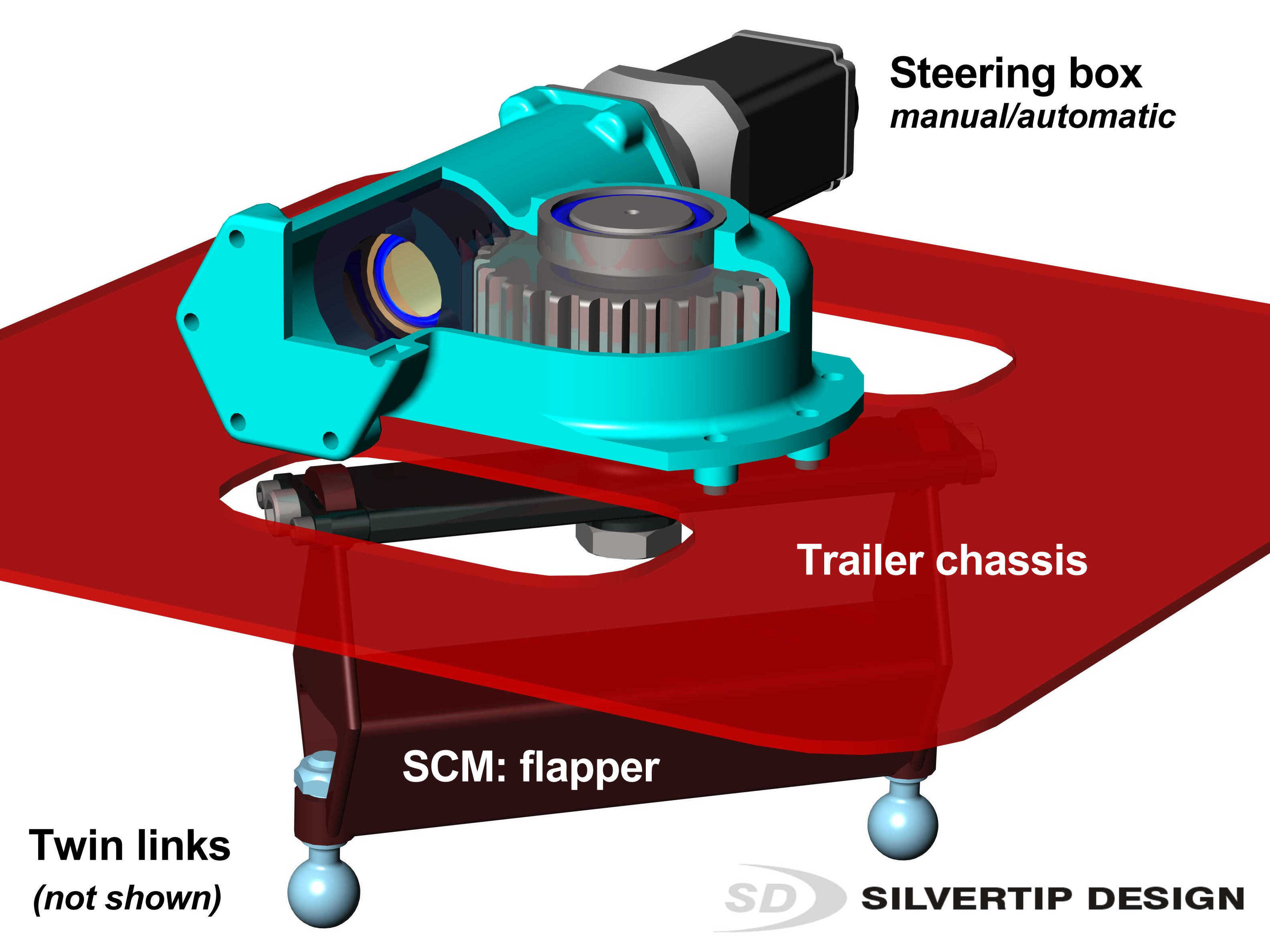
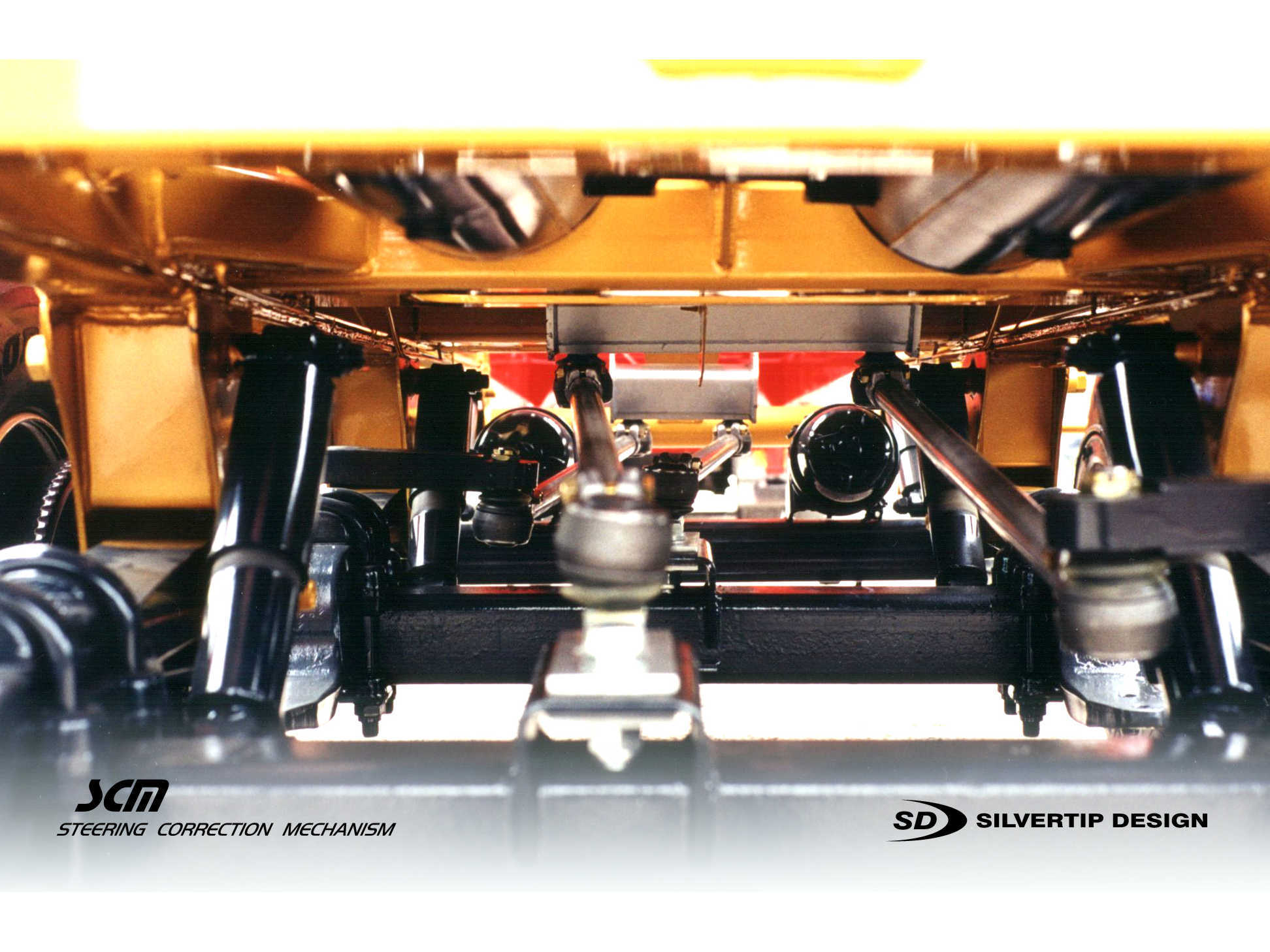
STABILISES STEERING SYSTEM
MODERATES STEERING FORCES
stabilisierendes Lenksystem
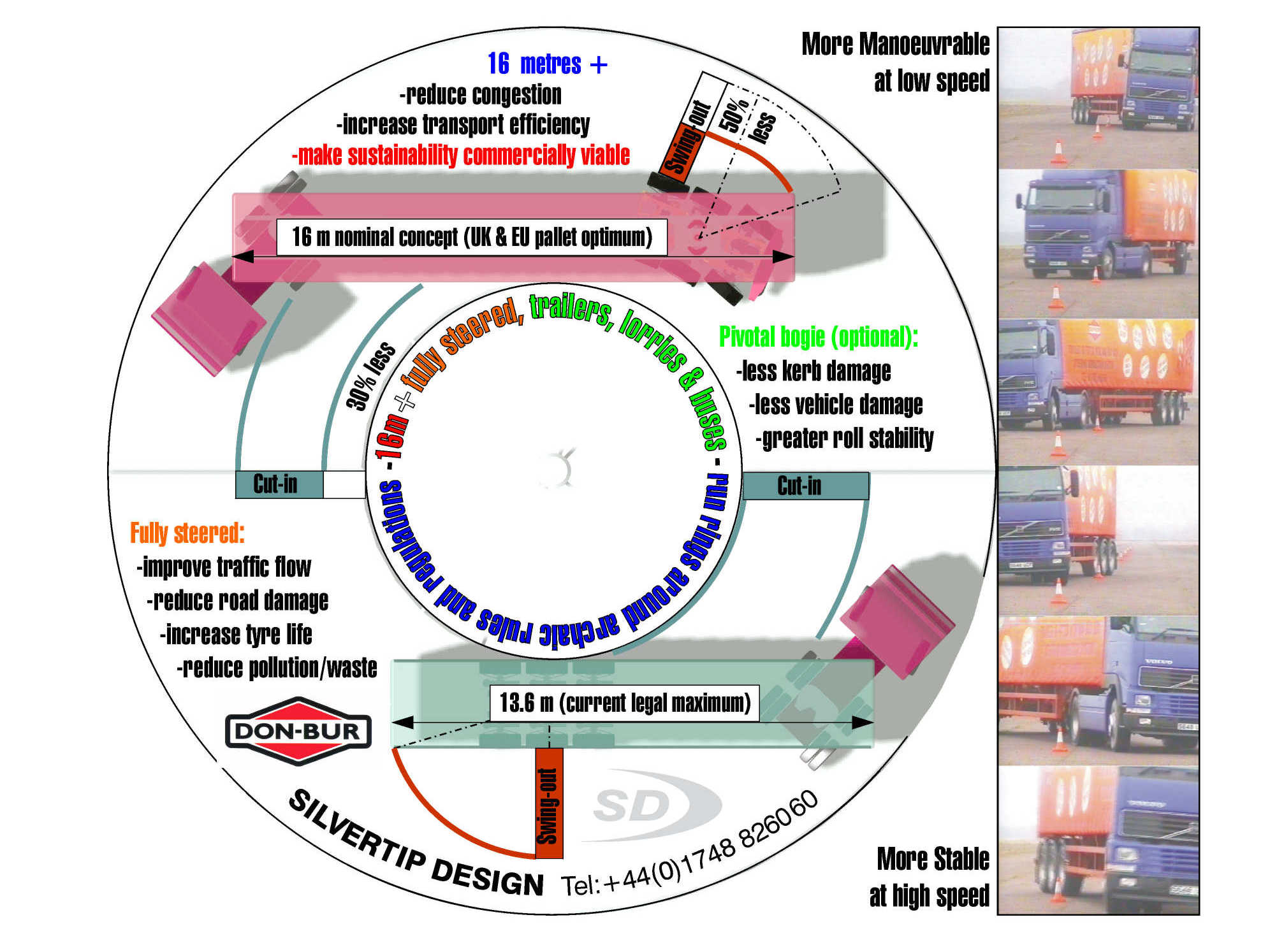
verringert die LenkkräfteMORE MANOEUVRABLE
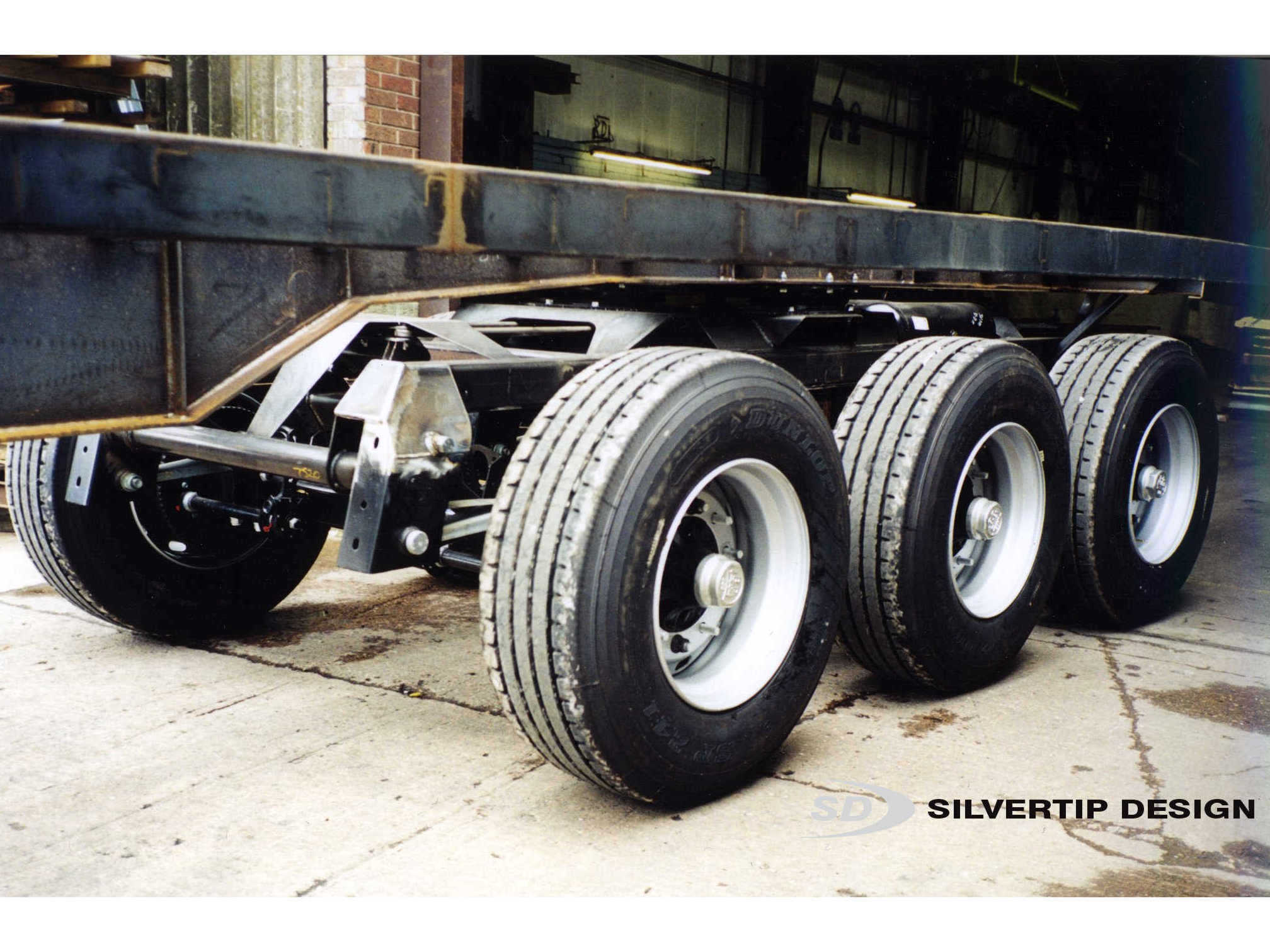
besser manövrierfähigSTEERED BOGIE
gelenktes FahrwerkBETTER LOGISTICS
bessere logistische OperationenLINKED LOCALLY OR
fest verbunden oderGREATER STABILITY
LOWER FUEL CONSUMPTION
größere Stabilität
niedrigerer KraftstoffverbrauchSTEERED REMOTELY
fernbedient gesteuert, mit Fernbedienung gesteuertFUTURE GENERATION: INTERNATIONAL MODULAR SYSTEM
zukünftige Generation: international eingesetzte Laderaum und Fahrzeugmodule
LONGER SEMI-TRAILERS AND MORE EFFICIENT COMBINATIONS
längere Sattelanhänger und mehr kraftstoffsparende Lastzugkombinationen
Low Speed Manoeuvrability
(avi 1.7Mb)
High Speed
Stability
(avi 1.8Mb)> > >
'Passive switch'
(mpg 13.6 Mb)< < <
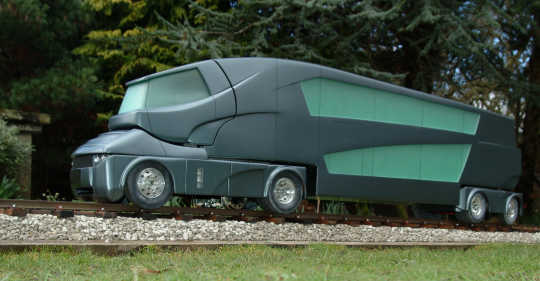
Ballasted Track (jpg 0.28Mb)
Imperial College, London Nov., 2005
.jpg)
Paper (pdf 1.8Mb)
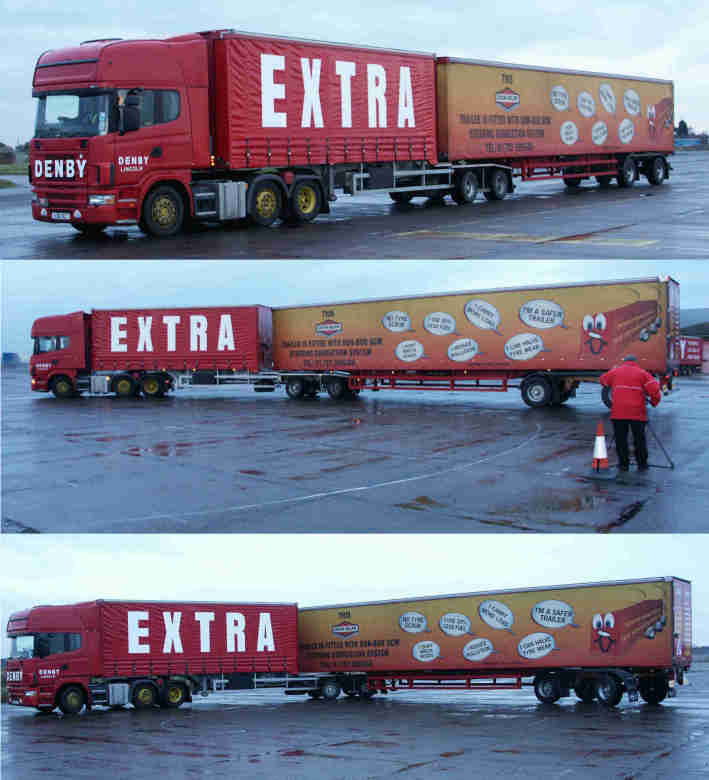
ReferencesEcolink + Steering Correction Mechanism (SCM) semi-trailer
New Benchmark for combined transport (CT) chains:
Video clip (wmv 2.4Mb)INTERFACE - Handles a 'next generation' of loading unit - (16m and 8m nominal)
Creates more usable capacity and improves the flow of traffic ON ROADS
Reduces handling overheads, haul distances and the dead-length ON RAILWAYS
Simplifies stacking and reduces handling (two lifts instead of three) ON SHIPS'ROAD HOG?' in a straight line
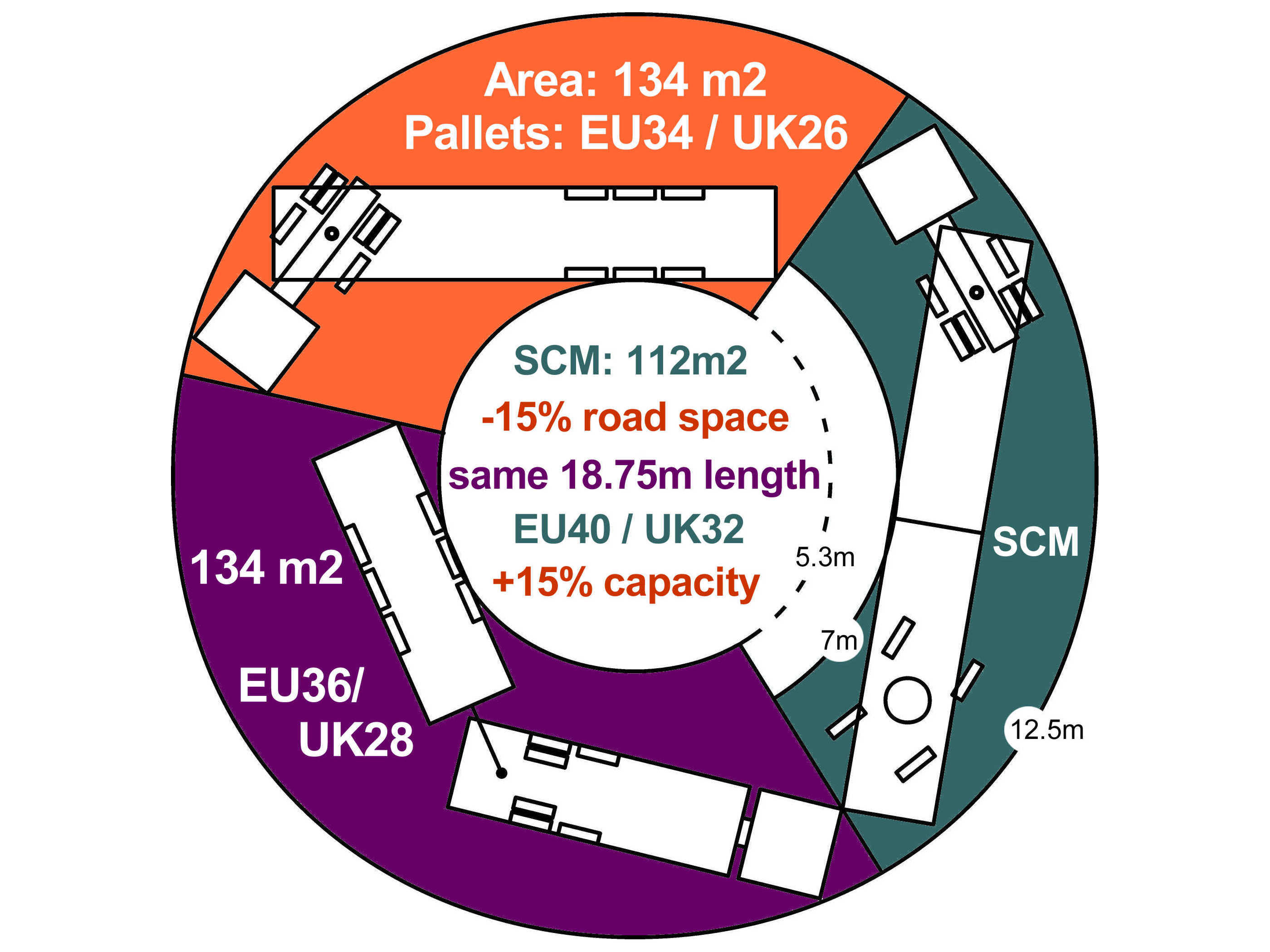
24.75m of load in (28.58m + 40m) of road = 1 / 2.8 (SCM+Ecolink) 100%
21.42m of load in (25.25m + 40m) of road = 1 / 3.0 (E.M.S.) 107%
13.6m of load in (16.5m + 40m) of road = 1 / 4.2 (articulated) 150%
2 x 7.82m of load in (18.75m + 40m) of road = 1 / 3.8 (draw-bar) 136%'ROAD HOG?' at junctions
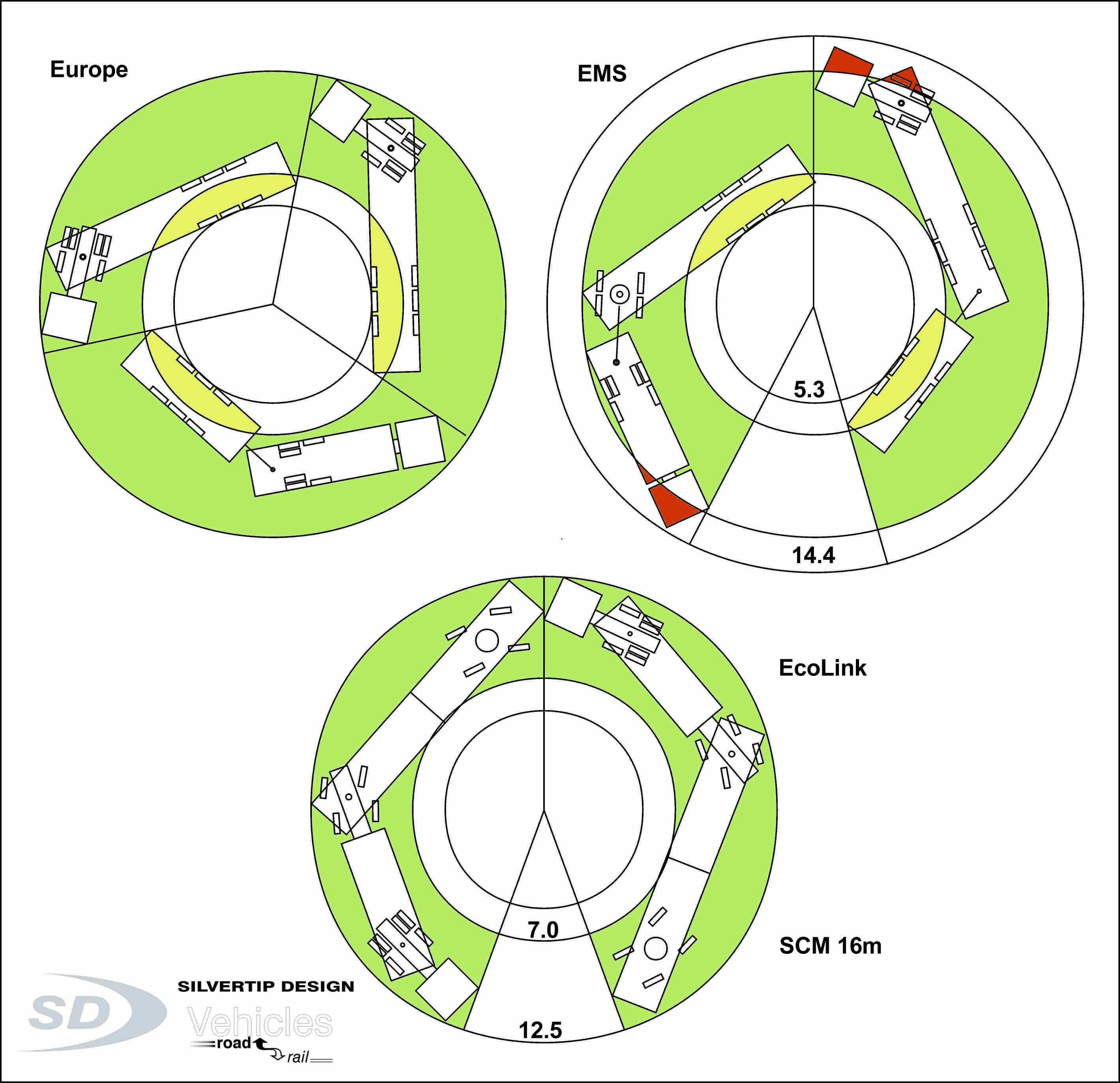
7.0m inner, 12.5m outer kerb = 5.5m corridor width (SCM+Ecolink) 100%
5.3m inner, 12.5m outer kerb = 7.2m corridor width (articulated & drawbar) 130%
5.3m inner, 14.4m outer kerb = 9.1m corridor width (E.M.S.) 165%
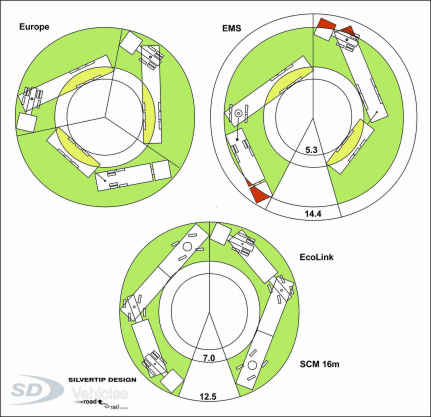
Ref: Euro Modular System (pdf) & International Loading Unit (pdf)
_ico.jpg)
Poster (jpg 1.0Mb)
INTERMODALISM
Get the best from rail and road
(Nov. 2005 page 21)Bigger trucks - good news or bad?
(Nov. 2005 page 24-27)Longer vehicles turned down
(Feb. 2006 page 15)Complementary systems:
Innovative Transportation Technologies
PRT / VMT / DM / ETT
BladeRunner - road/rail vehicles
Dualmode vehicles, the ultimate in intermodal transport
- Affordable concept allowing transport of freight or passengers on rail as well as road
- Spells rescue for branch lines
- Slashes fuel consumption and emissions
- Brings virtual motorway-standard access to rural areas
- Can expand use of tramways
- Takes out most rail infrastructure cost
- Raises carrying space
Economics of branch lines of the railways could be quickly transformed for the better with a dualmode vehicle being developed by an engineering design company near Darlington Stephenson rail pioneering country.
The innovative vehicle will run on road as well as rail. It is as applicable to freight as to passenger transport. Branch-line infrastructure costs could be at least halved because signalling and points could be largely, if not totally, made redundant.
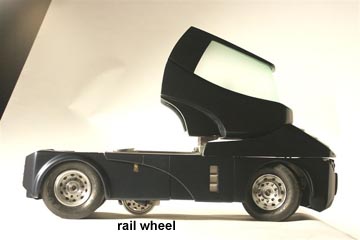
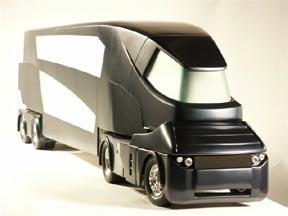
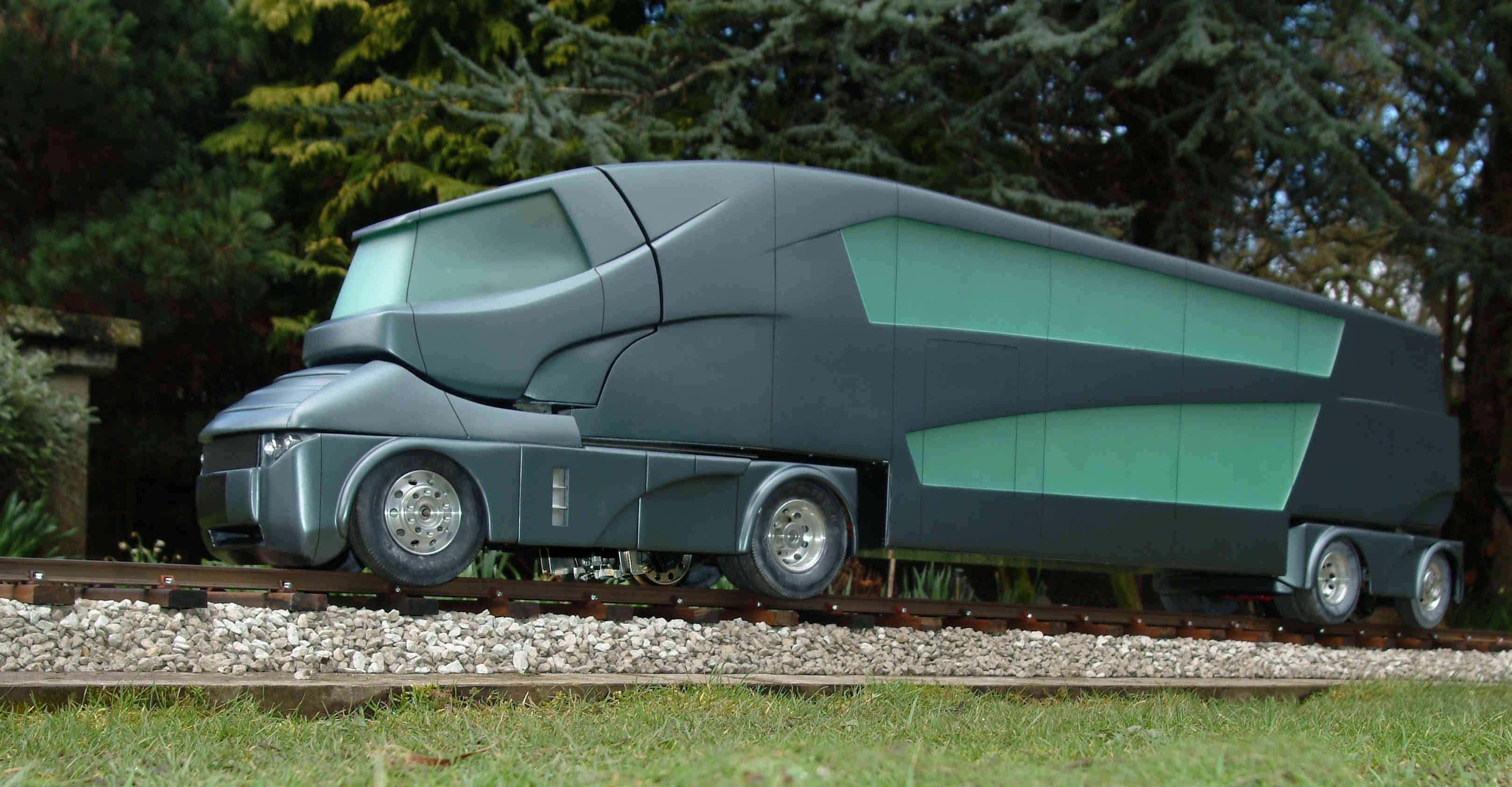
Leading the project is Carl Henderson, who runs engineering consultancy Silvertip Design in the village of Skeeby, Richmond, North Yorkshire. His dualmode project is being backed by freight trailer and body builder Don Bur, Stoke-on-Trent, and the government's Department of Trade and Industry. Although its load carrying portion can be either a lorry or a bus the dualmode vehicle resembles a familiar articulated truck up to 16.5 metres long under present regulations. The fundamental departure is that both the powered front section and the bogie of the trailed vehicle have retractable flanged wheels for travelling on railway or tram tracks.
This has been done before but has been heavy, complicated and expensive because of attempts to drive the rail wheels. The Silvertip dual mode does not do this. The driving and braking power comes from the road-mode tyres still contacting the rails.
Weight sharing between rail and road wheels is automatically varied according to the power transmission needs. Only light rubber-tyre contact is needed for normal motion because the rolling resistance on rail is a fifth of that on road much less power needed, so there is also less consumption of fuel.
For acceleration or braking more weight is transferred to the tyres. That speeds scheduling, as less time is spent accelerating from stops. Moreover, regular stopping distance is more than halved because of the enhanced grip. Emergency stopping distance could be cut by about 75 per cent, representing a veritable leap in ability to avoid rail collision.
By being able to change from rail to road transit, the dualmode vehicle can go off rail and steer past another vehicle or obstruction on a tramway. Indeed dualmode is a means of letting a 'tram' drive over to bus stops, enabling freight vehicles a clear tramway. When there is flush hardstanding, a dualmode vehicle can change route at junctions without relying on a railway points system.
Further than that, the dualmode vehicle can deviate from a railway and carry on by road to deliver or collect just like an ordinary bus or lorry. No time need be wasted in transferring goods or people from one mode of transport to another. It is the most versatile interpretation of 'intermodal' yet devised.
The exclusive routeing, speed and fuel economy of rail is combined with the convenience and organisational economy of road. Although the capital cost is understandably greater than that of a pure road vehicle, the overall operating cost is less.
Conservative costing indicates that the yearly depreciation charge would typically be £3,300 more than that of a normal articulated truck but that the savings on running costs would be £7,600. On rail a 45 per cent saving in fuel could be expected.
Railway maintenance costs would be slashed because the ingenious engineering provides a small degree of steering of the rail wheels when going around bends, obviating the alternating stick and slip squeal that causes rail wear. Bends with a radius as tight as eight metres can be tolerated.
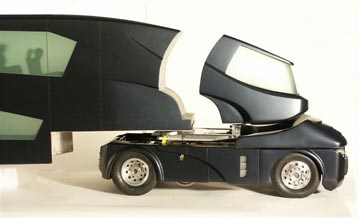
Addition of each retractable rail axle adds about half a ton. Another 1.5 tons would be added in the ultimate dualmode vehicle envisaged by Carl Henderson to increase payload volume now often the limiting factor more than payload weight. This is done by mounting the motive unit's cab, not on the chassis directly, but on a turntable frame that pins to the front of the trailer.
That eliminates the gap between tractor and trailerable, for freight, to give more interior load length and provide room for an extra row of pallets. Furthermore, because the rear bogie self steers, it provides more low-level space. Immediately this affords easy step-in access for bus versions while, for freight, there is more than 7 metres between front and rear bogies resulting in 115 cubic metres of total load volume within 4 metres overall height.
The Silvertip dualmode vehicle has reached the working model stage in one-eighth scale. It was displayed by Don Bur at the British commercial-vehicle show held at Birmingham's National Exhibition Centre in March 2004.
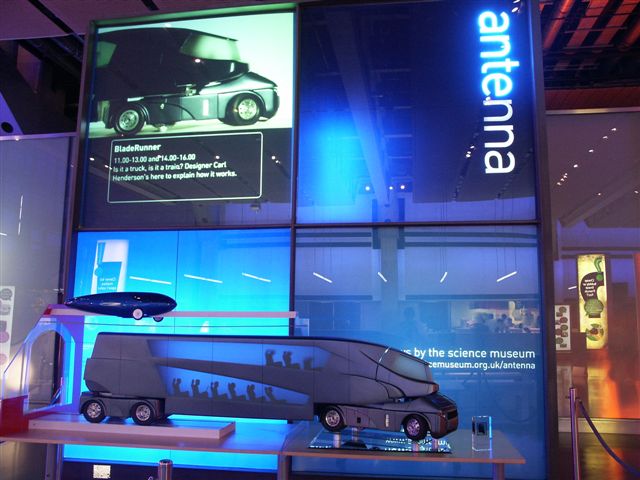
August, 2004 - BladeRunner and TriTrack at the National Science Museum in London as part of the Antenna Live series of events.
For more information please contact: Carl Henderson
[1] National Road Transport Commission, Steerable Axles to Improve Productivity and Access - Final Report, Brendan Coleman, Peter Sweatman, December 2002, ISBN: 1 877093 20 3, http://www.ntc.gov.au/filemedia/Reports/SteerableAxlesImproveProductivity.pdf
[2] COMPARATIVE PERFORMANCE OF SEMI-TRAILER STEERING SYSTEMS, 7th International Symposium on Heavy Vehicle Weights & Dimensions Delft, The Netherlands, Europe, June 16 – 20, 2002, Brian Jujnovich, David Cebon. http://www.cvdc.org/recent_papers/JujnovichCebon_7ISHVWD.pdf
[3] BTAC JUNE, 2001 UNIVERSITY OF HUDDERSFIELD FUEL EFFICIENCY AND TECHNICAL EVALUATION REPORT http://www.hud.ac.uk/sas/trans/techreport.pdf
[4] Fuel Savings Potential and Costs Considerations for US Class 8 Heavy Duty Trucks through Resistance Reductions and improved Propulsion Technologies until 2020, Tobias Muster, May 2000. http://lfee.mit.edu/public/el00-001.pdf
[5] Emissions from Volvo’s trucks (standard diesel fuel), Lars Mårtensson - 20640/03-017, page 3 Table 4 and page 5 Table 9 http://www.volvo.com/NR/rdonlyres/EF65E6D8-BF98-4BBF-B539- 18C925B53844/0/Emis_eng_20640_03017.pdf
[6] Automated Container Transport System between Inland Port and Terminals (ACTIPOT), Petros Ioannou, Anastasios Chassiakos, December 2002. Center for Advanced Transportation Technologies, University of Southern California & California State University. http://www.usc.edu/dept/ee/catt/2003/jianlong/02%20METRANS%20Fi nal%20Report.pdf
[7] VOLVO's ENVIRONMENTAL STRATEGY FOR NEXT GENERATION TRUCKS, Volvo Truck Corporation Environmental Affairs, Dep. 20640, 21 June, 2005 http://www.ae. org/fileadmin/user_upload/Commissions/RegionalPolicies/EventsAnd Meetings/2005/Presentations_Norrbotten/Cecilia-Gunnarsson.pdf
[8] A RESPONSE TO THE ‘DISCUSSION PAPER ON CANADA’S CONTRIBUTION TO ADDRESSING CLIMATE CHANGE’, Submitted by The Railway Association of Canada, July 2002 Final. http://www.nccp.ca/NCCP/national_stakeholders/pdf/Railway%20Assoc %20of%20Canada.pdf accessed 08/10/05
[9] Greenhouse Gas Reduction Opportunities for the Freight Transportation Sector by J. Caceres and D. Richards, Prepared by AgriTrade and Transport for the David Suzuki Foundation. http://www.davidsuzuki.org/files/freight.pdf accessed 08/10/05
[10] Benchmarking Intermodal Freight Transport, Organisation for Economic Co-operation and Development (OECD) 2002, IRTD number E112021. http://www1.oecd.org/publications/e-book/7702031E.PDF accessed 08/10/05
[11] INTERNATIONAL MARITIME ORGANIZATION APPENDICES - Study of Greenhouse Gas Emissions From Ships, March 2000, Page 57 http://unfccc.int/files/methods_and_science/emissions_from_intl_transpo rt/application/pdf/imoghgapp.pdf
[12] THE AERODYNAMICS OF HEAVY VEHICLES: TRUCKS, BUSES AND TRAINS December 2-6, 2002 Asilomar Conference Center, Monterey-Pacific Grove, California - http://eed.llnl.gov/aerodrag/pdf/ucrlid151073.pdf
[13] Appendix C-3 TECHNOLOGY ASSUMPTIONS C-3,5 USA http://www.ornl.gov/sci/eere/cef/CEFCh6.pdf
[14] THE NEED TO REDUCE TRANSPORT ENERGY USE, AND WAYS TO DO IT, Sustainable Transportation Monitor, No. 10, June 2004 http://www.cstctd.org/CSTadobefiles/STM10E-final.pdf
[15] PACT - CO2 REDUCTION THROUGH COMBINED TRANSPORT, SUMMARY REPORT, UIRR, International Union of Combined Road- Rail Transport Companies, Brussels (Belgium), JULY 2003. Page 10. http://www.uirr.com/document/pub/CO2_reduction_EN_def.pdf
[16] Transport in Change, Ulf Ehrning Volvo 3P Market Research Team 23310 – 2004-03-17, page 18 http://volvoeu.meridian.be/transport/Volvo%20Transport%20developme nt.pdf [17] Fuel consumption, over time, for a European tractor and semi-trailer in long-haul traffic l / 100 km Percent, Source: Volvo Truck Corporation http://www.volvo.com/NR/rdonlyres/EF65E6D8-BF98-4BBF-B539- 18C925B53844/0/Emis_eng_20640_03017.pdf [18] Evaluating Track Structures: Life Cycle Cost Analysis as a Structured Approach, Arjen ZOETEMAN1, Coenraad ESVELD2, Delft University of Technology, Sept 2001. http://www.tbm.tudelft.nl/webstaf/arjenz/Paper%20WCRR99%20Tokyo.pdf [19] I5 - TRUCK ACCOMMODATION DESIGN GUIDANCE: DESIGNER WORKSHOP, FHWA/TX-04/4364-2, Dan Middleton, October 2003 http://tti.tamu.edu/documents/4364-2.pdf [20] GLOBAL ENERGY - The challenge for policy makers BY HON. DONALD JOHNSTON SECRETARY-GENERAL, ORGANISATION FOR ECONOMIC CO-OPERATION ANDDEVELOPMENT (OECD). Dec 2003. http://www.worldenergy.org/wecgeis/ global/downloads/first/europe/johnston.pdf [21] Vehicle Mass Transit System (VMTS) - Car Bus Demonstrator, Canadian Transportation Research Forum, Prince Edward Island, Canada, June 4-7, 2000, by David Petrie, PETRIE TRANSIT CONSULTANTS http://faculty.washington.edu/~jbs/itrans/petrie_paper.htm [22] Ultra Narrow Vehicles (UNV) - Commuter Cars Corporation http://www.commutercars.com/intro.html [23] Why we need a transport revolution, Malcolm Buchanan, Chair, Transport Research Institute, Napier University, Edinburgh. http://faculty.washington.edu/jbs/itrans/buchanan%20revolution(V2).htm Standardisation Needs for Intermodal Loading Units [24] Comité Européen de Normalisation (CEN) - Intermodal and interoperable workshop - 1999-12-13/14 page 40 http://www.cenorm.be/cenorm/businessdomains/businessdomains/transportand packaging/intermodal+and+interoperable/final1999.pdf [25] Current State of Standardisation and Future Standardisation Needs for Intermodal Loading Units in Europe, 28 September 1999, HaCon Ingenieurgesellschaft mbH Germany, Three Quays Marine Services UK, UIRR Belgium. http://labs2.itcube.be/extra/final_reports/integrated/Utinorm.pdf [26] Possible consequences of a new European container standard (EILU), Frederik Hallbjörner, Claes Tyrén, MASTER THESIS, School of Maritime Studies Supervisors: Prof. Kenth Lumsden and Per Jessing CHALMERS LINDHOLMEN UNIVERSITY COLLEGE Göteborg, Sweden 2004 http://www.maritimeforum.se/pdf/slutrapport.pdf [27] UIRR - Intermodal loading units, ENCOURAGE INTEROPERABILITY INSTEAD OF FORCING IT! International Union of combined Road-Rail transport companies. Sept. 2004. http://x-rail.net/static-docs/UIRR-EILU.pdf [28] THE UNITED KINGDOM MAJOR PORTS GROUP LIMITED, Letter from John Dempster C.B to DfT, Proposed European Directive on Intermodal Loading Units, 15 September 2003. http://www.ukmajorports.org.uk/docs/Proposed%20EU%20Directive%20on%2 0ILUs.pdf [29] THE STANDARDIZED CONTAINER: Gateway Technologies in Cargo Transportation1 Tineke M. Egyedi2 Department of ICT Faculty of Technology, Policy and Management Delft University of Technology. Page 22 http://www.tbm.tudelft.nl/webstaf/tinekee/container_Euras.pdf [30] Transport in Change, Ulf Ehrning Volvo 3P Market Research Team General, Cargo is Volume Sensitive, March 2004, pages 18-20 http://volvoeu.meridian.be/transport/Volvo%20Transport%20development.pdf International Task Force on Vehicle-Highway Automation [31] Truck Automation: Opportunities & Deployment Paths International Task Force on Vehicle-Highway Automation Summer Meeting, July 2004, Troy, Michigan, USA, Workshop Report. http://ivsource.net/public/ITFVHA_Truck_Automation_Workshop_Report.doc [32] PATH Research on Truck Automation Technology, Steven E. Shladover, Sc.D. ITFVHA Meeting Troy, MI, July 2004, http://ivsource.net/public/ppt/shladover_truck_automation.ppt [33] Truck automation deployment studies in France, International Task Force on Vehicle-Highway Automation, Detroit, J.M. Blosseville, S. Mammar, July 22, 2004. http://ivsource.net/public/ppt/livic_truck_automation.ppt
[34] National I-10 Freight Corridor Study, Kentucky Appalachian Regional Intermodal Airpark, Arno Hart, Wilbur Smith Associates. http://ivsource.net/public/ppt/hochmuth_i10.ppt [35] Co-operative Vehicle - Highway Systems Research - presentation, Ian Fraser, Highways Agency, June 2005. http://ivsource.net/public/ppt/ITFVHA01-UKHA_Fraser.ppt [36] European Wind Energy Association (EWEA) WIND ENERGY COSTS - INVESTMENT FACTORS - fact sheet, Dec. 2004 http://www.ewea.org/documents/factsheet_economy2.pdf

.jpg)

.JPG)




%2001.jpg)
.jpg)